 admin
admin I don’t finish many video games. I suspect this is not a unique situation. I have a job, a partner and children. There’s a house to keep, friends to stay connected to. And that job, despite appearances, is not Actually lends itself to completing (or sometimes even playing) an awful lot of video games. I am meant to have approximate knowledge of many things and to know enough about many things that others can understand them. That means a little bit of time everywhere.
And yet somehow I found myself not just completing Sucker Punch’s Ghost of Yotei long before the review embargo, but I actually ended up with my first ever Platinum Trophy – Dragon Age: The Veilguard would have been the first, but a sneaky choice locked me out of some character missions – the day of release.
Time well spent

Annual review 2025
Partly this is, again, because it’s my job. For major releases like this, early review code is often limited, so anyone who gets access should make the most of it.
I went in from the beginning knowing there would be a chance I would write articles, guides, or help with reporting in any number of other ways. So in some ways I was susceptible to spending a lot of time in Ghost of Yotei.
So why then? Why did I completely and utterly indulge in everything Sucker Punch had to offer? What compelled me to seek out every vanity item until there were none left to be found? I’m not entirely sure I have an answer, but I have a hunch.
I guess the argument I made earlier this year about how good it felt to just wander around Ezo ultimately meant that I did… more of that than usual. Instead of finding specific map markers, going from point A to point B to point C, without bothering to go anywhere else, Ghost of Yotei’s design encouraged me to wander around – and it felt good to do so.
An experience walk
I’m sure I’ll succumb soon and see myself happily walking through Ezo again.
I keep coming back to something Ghost of Yotei creative director Jason Connell told me in an interview ahead of release. I specifically asked about pacing and pathfinding, as Ghost of Yotei doesn’t have a traditional minimap or map markers and the like for navigation.
“Can we give you more control over the experience, without worrying too much about things like question marks on the map or reading a fairly comprehensive diary of everything you’ve done, could do and could do?” he said at the time, building on the idea that Sucker Punch is trying to challenge itself.
“Try to bring it in a more progressive, experiential way,” he continued. “And I think I’m really proud of what we were able to achieve there. It’s really hard to take the industry norms or the norms that you put in your last game and shake them up, right? And we have a number of ways that we’ve shaken things up, and I’m proud of the team for trying these new ways to connect with people.”
At the time, Connell pointed out everything from Ghost of Yotei’s clue system to camping and the Wolf Pack menu, which comes on top of environmental design that boils down to “see a cool thing in the distance, go to a cool thing in the distance.” It all fundamentally works together to, well, create an experience.
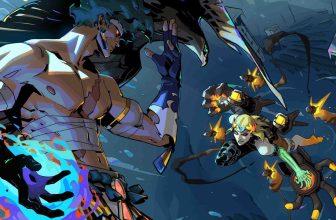
Not that other games don’t have immersive experiences. Hades 2 had me by the throat a lot of hour, and there are plenty of other new games I’ve enjoyed this year.
But Ghost of Yotei’s various mechanical elements all kept me engaged, moving, and invested in a way that nothing else did. I don’t know if Ghost of Yotei is my personal Game of the Year, but it’s certainly the only game this year that I can honestly say I got lost in.
The spell was somewhat broken upon release as, you know, I had literally done everything. But the recent New Game+ release with additional upgrades and vanity items is a constant siren song in the back of my mind. I’m sure I’ll succumb soon and happily walk over Ezo again. After all, the Yotei Six must die.
If you want to see how Ghost of Yotei compares to the rest of this year’s games, be sure to check out our rankings of the best games of 2025.