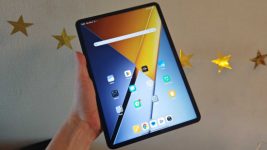
The Poco Pad X1 might be a budget Android tablet, but it feels like a premium iPad alternative
 admin
admin It might surprise you to learn that I, Pocket Tactics’ hardware editor, am not that much of a tablet guy. I have a couple of them around my office, and I occasionally use my iPad to play a bit of RollerCoaster Tycoon Classic, but outside of that, I mainly game and watch content on my TV, Steam Deck, or mobile. I’ve always thought, though, that the right tablet could convert me. So, when I got the offer to check out the new Poco Pad X1, I figured I’d give it a go. Who knows, it could be the one.
Why you can trust our advice ✔ At Pocket Tactics, our experts spend days testing games, phones, tech, and services. We always share honest opinions to help you buy the best. Find out how we test.
Given that we’re a gaming site, my primary concern was how the Pad X1 handles mobile games. In that regard, it’s pretty decent. It packs Qualcomm’s Snapdragon 7+ Gen 3 chip, which is a decent mid-range processor capable of running anything you can find on the Google Play Store. For demanding games like Genshin Impact and Honkai Star Rail, you might have to lower the settings a little bit for the best gameplay experience, but not significantly, and the likes of Marvel Snap and PUBG Mobile run just fine.
The design of the tablet is a little tame for Poco – this is the same brand that just revealed a denim phone – but I like it. The bezels are a bit thick, but outside of that, it feels like a premium tablet, rather than a lower mid-range option. There’s a bit of a flourish with the yellow camera bump in the corner of the device, but it’s nice and subtle, which makes it perfect for using at home or in the office.
As with the brand’s phones, the Poco Pad X1 is a bit of a battery beast. You can use it pretty actively throughout the day, for work or play, and you should still have enough juice left over for some streaming and winding down come the evening. In terms of charging, I managed to juice from flat to full in just over 90 minutes using the charger and lead that comes in the box, and that’s pretty good going for a tablet at this price point. It’s not going to blow your socks off, but a 50% charge in under an hour is solid.

The Pad X1 runs Xiaomi’s HyperOS Android skin, and while some are critical of this software, I don’t really have a problem with it. Yes, it’s not quite as user-friendly as iOS, but it’s clean and pretty simple to get your head around. Plus, there’s the Game Turbo app, which is great if you want to keep an eye on CPU and GPU performance, and there’s even an option to toggle performance optimization to avoid overheating or throttling. Given that this isn’t a gaming-specific tablet, that’s a pretty handy bit of software.
To get the full experience, Poco also sent me over some accessories for the Pad X1, including the Focus Pen, Floating Keyboard, and a cover. I’ll be honest, I don’t have much use for the Focus Pen, as my artistic skills aren’t even slightly worth writing home about, but I can imagine it’s a pretty useful tool for anyone who wants to use the X1 to get creative.
As for the Floating Keyboard, that’s a bit of tech I can get on with. Attaching the Pad X1 to the keyboard is nice and easy, and once it’s on, there’s no complicated setup; it just works. You can, if you want, jump into the settings and adjust the cursor style and pointer speed as I did – the pointer felt a little slow at first – but if you’re not a tinkerer, it should be fine to use as is. For most of my testing, I kept the X1 attached to the keyboard and used it much in the same way I might a Chromebook. It’s a little bit heavy, but it also feels more premium than a lot of similarly priced alternatives, so I don’t mind it weighing me down a touch.
Funnily enough, my main issue with the Poco Pad X1 is the same one I had with the Xiaomi Pad Mini I checked out a couple of months ago. I just wish it had an OLED display. I get that using an LCD probably keeps the price down for the manufacturer, but I’d be willing to pay an extra $50 or $100 just for the benefits of OLED.
The X1’s LCD isn’t by any means bad; it’s still more than decent for gaming and streaming video content, but I’m a bit spoiled by the fact that everything else I own, except for my Nintendo Switch 2, is OLED, so the difference in terms of color depth is a bit noticeable. I do appreciate the 144Hz refresh rate, though, as that makes for buttery smooth gameplay right across the gamut of possible games you might play on this tablet.
I have got a couple of other bugbears with the Pad X1, though. For a start, it feels weird using a device in 2025 that doesn’t offer fingerprint recognition for unlocking. That wouldn’t be so bad if it weren’t for the fact that the facial recognition is iffy, and I often found myself just using my password, semi-frustrated after a couple of attempts to unlock the tablet using my face.
Despite these caveats, for $399, I think the Poco Pad X1 is a pretty impressive piece of kit. I’m not quite sure it’s the tablet that will transform me into a regular user over time, though that’s partially Poco’s own fault, as I was so impressed by the new F8 Ultra that it’s now become my Android gaming go-to.
Still, I’d happily recommend it to anyone looking for an alternative to the likes of Apple’s iPad and Samsung’s tablet lineup, especially if you’re looking for something under $500. It’s just a shame, as with the rest of 2025’s impressive Poco and Xiaomi devices, that it’s so hard to get your hands on in the US. Otherwise, this would be a surefire pick for our guide to the best gaming tablets.